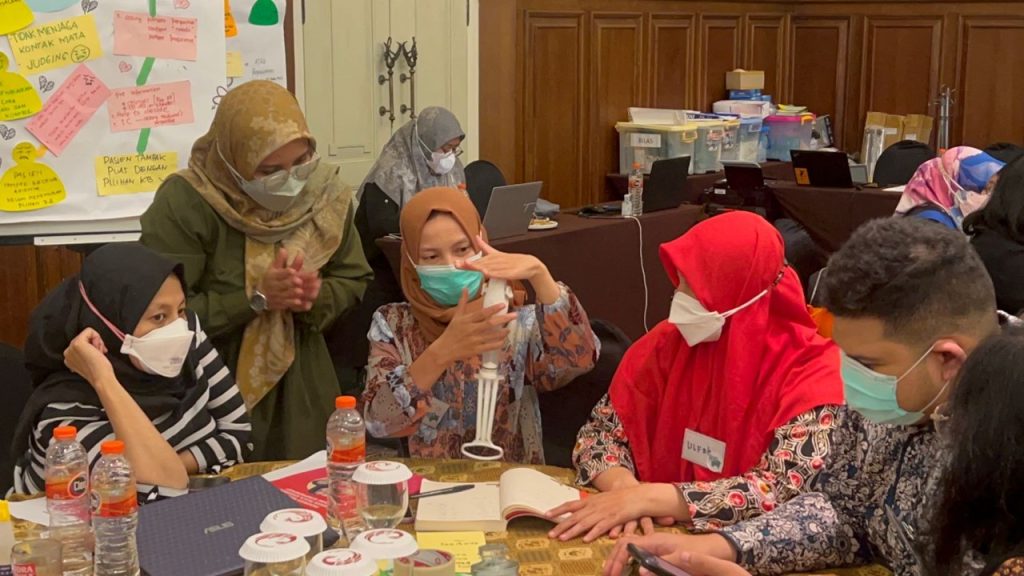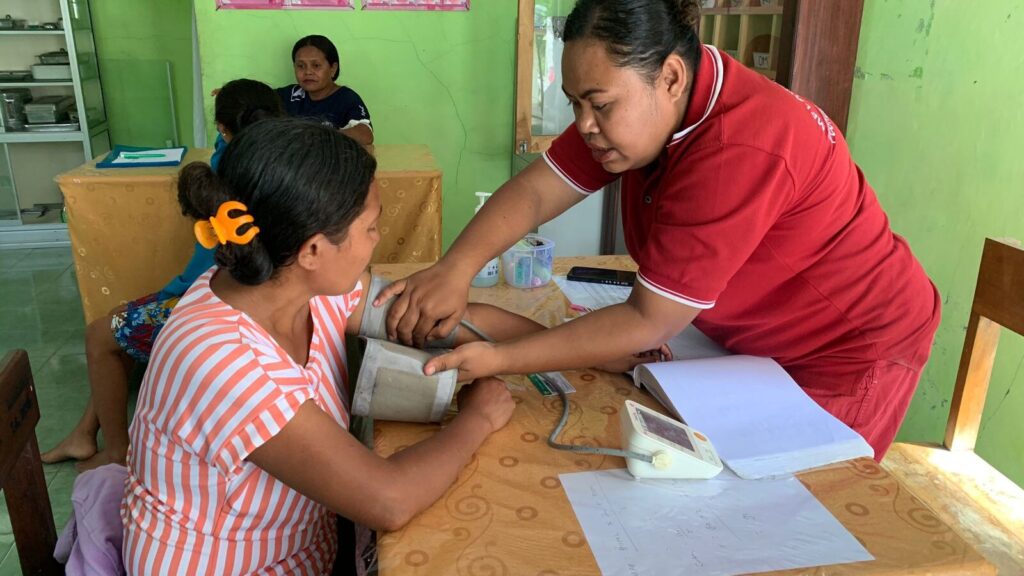
The role of midwives is one of the important contributions to reproductive health services, especially in Disadvantaged, Border, and Island Areas (DTPK) in Indonesia. They not only assist in childbirth, but also become service providers for contraception, and even become one of the entry points for reports of sexual violence experienced by women. Many women choose to access reproductive health services through midwives, because in many areas, the distance to health facilities such as puskesmas and hospitals is quite far. Therefore, it is important to ensure quality midwifery services that are able to support women to be more empowered and able to make decisions about their own bodies.
One of the main principles in midwifery services to support women’s reproductive choices is through the Respectful Midwifery Care (RMC) approach . What exactly does this approach mean? Why is RMC important in the discussion of reproductive health services? Let’s talk with expert and midwife Jamilatus Sa’diyah or who is familiarly called Midwife Mila. This discussion is hosted by IPAS Indonesia Foundation’s Policy and Advocacy Staff, Ignatia Glory, aka Igna.
Igna: What is Respectful Midwifery Care (RMC) and why is this approach important for midwives? ?
Midwife Mila: Respectful Midwifery Care is a service that is dignified, humane, respectful. The point is women-centered, midwives must empower women so that they can decide on reproductive health services that suit their needs. For example, if a patient comes to the midwife to install birth control, the midwife needs to be able to explain in detail about the benefits, side effects, limitations, and advantages. Provide complete information, let the patient take control of her decision. This approach is important for midwives because midwifery services should not only focus on medical procedures, but also respect women’s bodily autonomy and well-being.
Igna: How do you concretely respect women’s right to bodily autonomy?
Midwife Mila: The point is to respect women’s choices. A woman has the full right to choose what contraception she wants to use, when she wants to get pregnant, or how she wants to give birth and that decision should not be taken over by the midwife, husband, or family Education should be done with empathetic language, not blame. For example, after family planning education, the patient chooses to have an IUD or spiral only, then we respect her decision, not commenting “You have 5 children and only use an IUD, if you are like this, you are sterile”. We must create services that make women feel safe and comfortable. It is also important for midwives to ask for and obtain consent before action, even for something as simple as removing the patient’s blanket. Don’t just say “Mom, take the blanket off!”, but explain the procedure you want to do. With autonomy respected, women will be better prepared to undergo the reproductive process.
Igna: In an ideal world, all decisions would be made by women themselves. But in reality, there are situations known as reproductive coercion (forced reproduction)? Why does this happen?
Midwife Mila: Reproductive coercion is any form of pressure, control, or action that takes away a woman’s right to control her body and reproductive decisions. Examples include contraceptive insertion without the patient’s consent. There are cases of IUDs being inserted secretly after childbirth, and women only find out about its existence after months or even years. That is clearly a form of violence. Another example is when a woman wants to use contraception but her partner forbids it. Reproductive coercion occurs due to a powerful combination of patriarchal culture, social pressure, religious stigma, and restrictive regulations.
Igna: If a woman wants to use contraception but her partner refuses, how does the RMC principle apply in this situation?
Midwife Mila: Of course we should still listen to the woman and empower her through clear information. Then, if possible and safe, the midwife can engage the couple in an empathic discussion, not to put the husband in a corner, but to help them understand that maternal and child health is also a shared responsibility. In some cases, good education can make couples more understanding. But we must also be realistic: there are situations where discussions can lead to conflict or even violence. In such circumstances, women’s safety comes first, and midwives need to provide more careful support and ensure access to harmless services. Regulations that require the husband’s consent often leave midwives in a dilemma, because while they want to help women, they fear facing sanctions or threats from the family. Policy reform is therefore urgently needed.
Igna: Looking at the socio-cultural dynamics, who is responsible for contraception?
Midwife Mila: The responsibility for contraception should ideally be shared by both partners. Unfortunately, socially, this burden almost always falls on women. Even though there are many family planning methods for men ranging from condoms to vasectomy, which are much lower risk than hormonal family planning for women. I even shared that in my family, my husband is the one who uses birth control because he knows I have struggled through pregnancy, childbirth and breastfeeding. Men need to be more involved, not to take over decisions, but to share the burden and support their partner’s reproductive health.
Want to hear more about the discussion on Respectful Midwifery Care? You can listen to it via the Instagram Live recording in the link below.
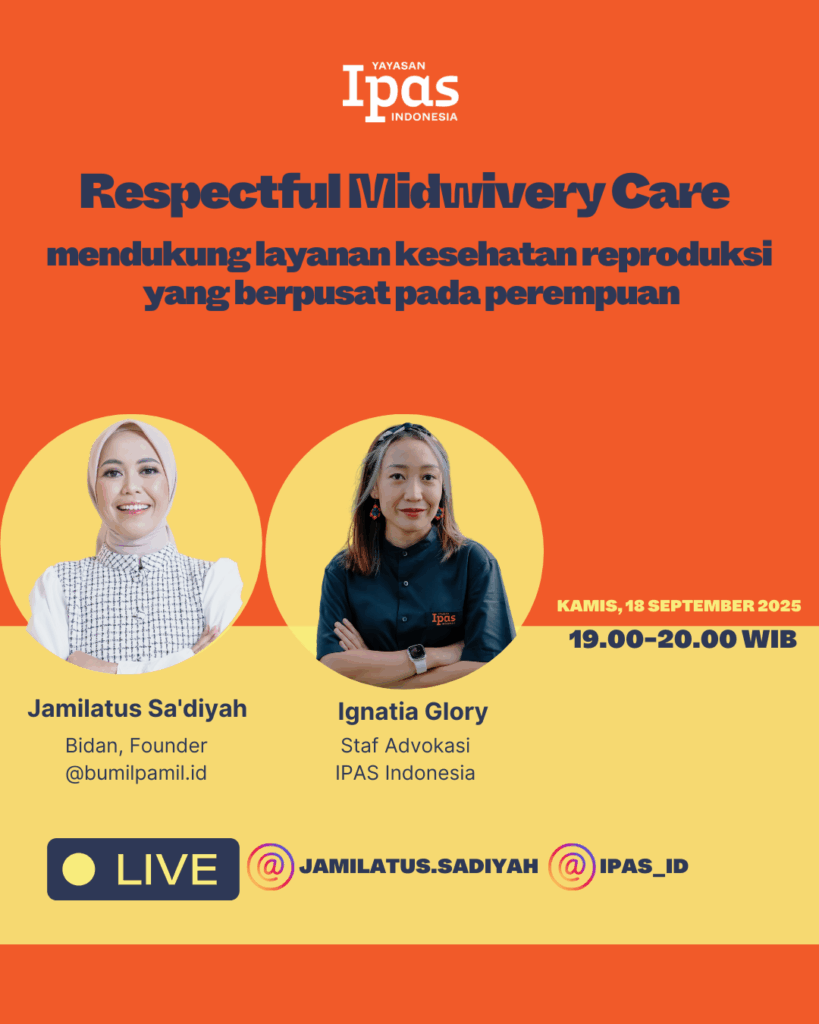
Every month, IPAS Indonesia organizes discussions related to the topics of reproductive justice, gender, and women’s issues on Instagram Live. You can follow IPAS Indonesia’s Instagram to find out more.