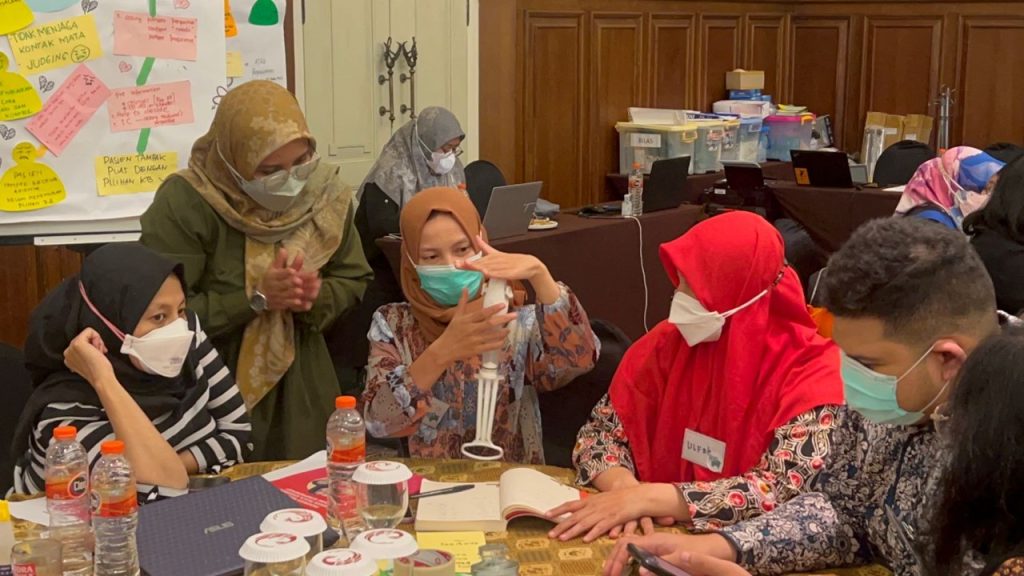
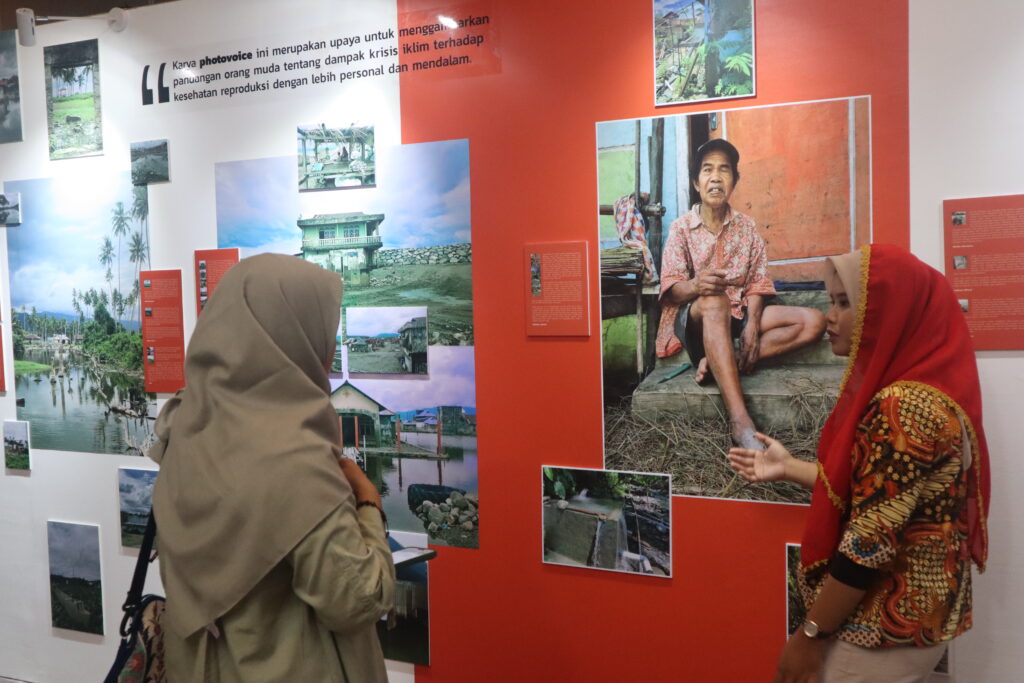
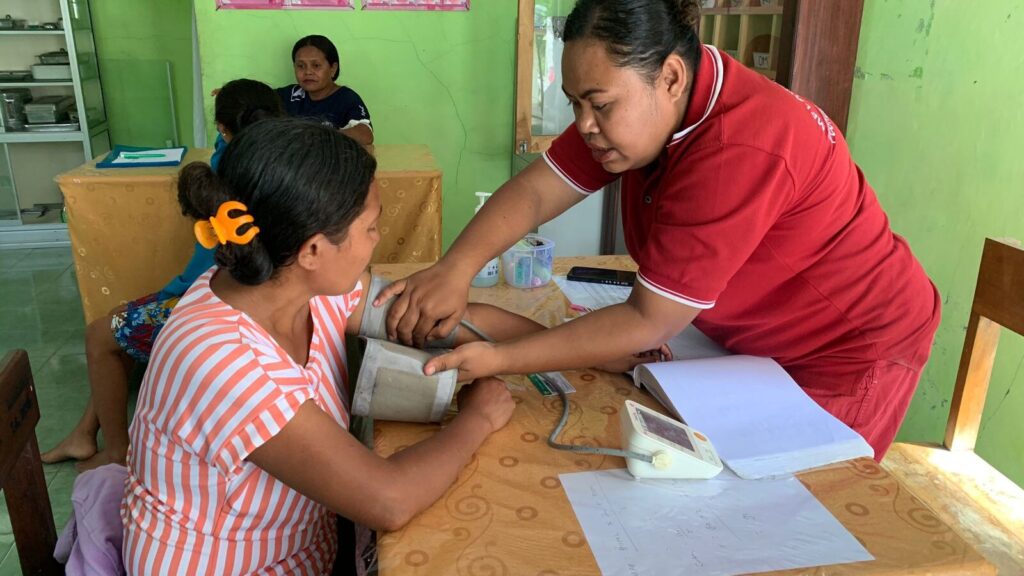
Since 2023, IPAS Indonesia has been working with the government of East Nusa Tenggara to reduce the maternal mortality rate (MMR) and increase access to contraception or family planning (KB). This collaboration is established through the Tekad Bersama untuk Kesehatan Perempuan Nusa Tenggara (TAKENUSA) project. The project is run in three districts namely, Kupang, South Central Timor, and East Flores.
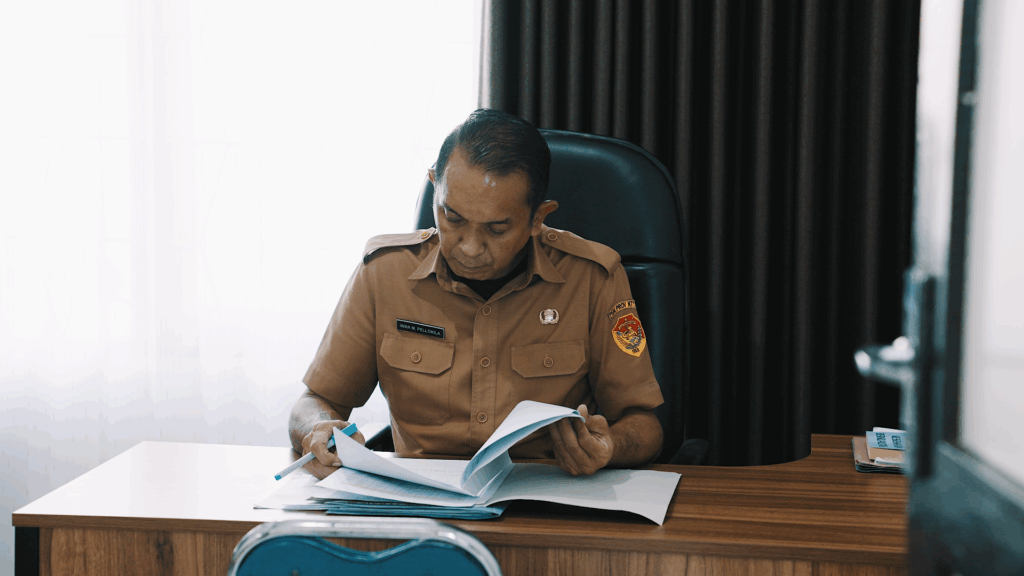
In June 2025, the IPAS Indonesia team met with the Head of the Public Health Division of the NTT Provincial Health Office, Iwan Martino Pellokila, S.Sos. In his office located on Jalan Pulau Indah, Kupang City, we talked about the condition of women’s health in NTT. We also wanted to know how the TAKENUSA project has contributed to the issue of MMR and family planning.
Good afternoon Mr. Iwan, how are you? Can you tell us about your daily life as the Head of KesMas (Community Health) at the Health Office?
On a daily basis, yes, if I am the Head of the Public Health Division, of course it is also related to matters of public health in general. Yes, among others, for example, like today the topic we are talking about PAC or Postpartum Care (ed:Post Abortion Care). Well, this also needs the attention of all my friends.
If I may know, what is your career journey until now as Head of the Health and Wellness Division?
If you talk about me at the NTT Health Office, I entered the Health Office in 2017. Honestly, I am not a health [background] person. I am a government person. The beginning of my career was at the Government Bureau. But in 2017 I moved to the Health Office. At that time there was something called the Population and Civil Registration Division. I was there. But because I had to join the Health Office, which was originally at the Government Bureau, I had to shift and move to the Health Office. That was the beginning of my career when I entered the world of health. So on January 1, 2021, I was appointed as Acting Head of the Public Health Division. The acting position continued until May 28, 2021 [until] I was appointed.
As the Head of the KesMas Division, what is the condition of MMR and family planning in NTT Province?
So if we generally talk about family planning services, including this PAC, according to the data we have, the issue of family planning, and the APK itself is still a big struggle for us in NTT. This is evident, for example, we can see that there are still high maternal and infant mortality rates in NTT Province. What this means is that these figures actually show that access to health services, especially those related to family planning, as well as the PAC itself, needs to be encouraged to become a service that is truly maximized, so that in the future we hope that there will be a decrease in numbers, for example for maternal mortality rates, infant mortality rates in NTT Province, which are quite significant.
What are the challenges in reducing MMR and increasing access to family planning?
Well, when talking about challenges, of course we have to look at how the community can access health facilities. It’s a bit different from the conditions for example in Java. [Java is [mostly] a mainland province. If we are an archipelago. Well, this of course has its own obstacles. There are challenges. But with our conditions today, we cannot deny that it is still necessary to increase the competence, increase the capacity of existing health workers. That is, one. Secondly, the availability of human resources who already have the competence to handle these matters.
Especially if today we are talking about PAC or Post Abortion Care, this needs to be continuously improved because if we look at the existing data, this PAC is still quite high. So, if we draw a red thread with the existing data, of course we need personnel who are able to carry out in accordance with the existing SOPs sometimes handling the APK in question. So that the problems of morbidity, maternal, infant, and toddler mortality can automatically be suppressed or minimized.
Are there any other challenges?
When it comes to infrastructure, yes we also have very, very limited infrastructure. When talking about puskesmas or first-level health facilities, we have reached 440 puskesmas. However, this number has not been matchedby the number of health workers needed for a health center.
What efforts have been made by the Health Office to unravel these challenges?
When talking about what the Provincial Health Office does, of course we cannot get far from the authority that exists in the provincial government. Well, if the authority that exists in the provincial government is supervision, monitoring, evaluation, capacity building. Well, this is the main role of the provincial government in this case the East Nusa Tenggara Provincial Health Office to be able to increase capacity, increase competence, especially in midwives. So that in the future, problems related to reproductive health should or at least can be minimized.
So, what about the TAKENUSA project?
Well, I am happy of course with the presence of IPAS Indonesia with the TAKENUSA program, indeed if you want to see this program it is also quite good and has a positive impact on reproductive health issues, especially post abortion care.
Well, this is the positive impact that I feel with the facilitated trainings, which were initiated by the IPAS Indonesia Foundation, adding to the impression, adding references for health workers, especially those in the field of services in health facilities.
What impact has the TAKENUSA project seen?
So, if we talk about the direct impact, yes, the direct impact, we see now that the IPAS Indonesia project is in three districts and in the city of Kupang, yes indeed, if we look at the naked eye, we cannot see significant changes. But if you want to see the level of participation or activity of mothers giving birth at the puskesmas or at other health facilities, it has a significant impact.
Well, we hope that in the future, programs such as those initiated today, not only in these three districts, can be expanded with other programs related to reproductive health.