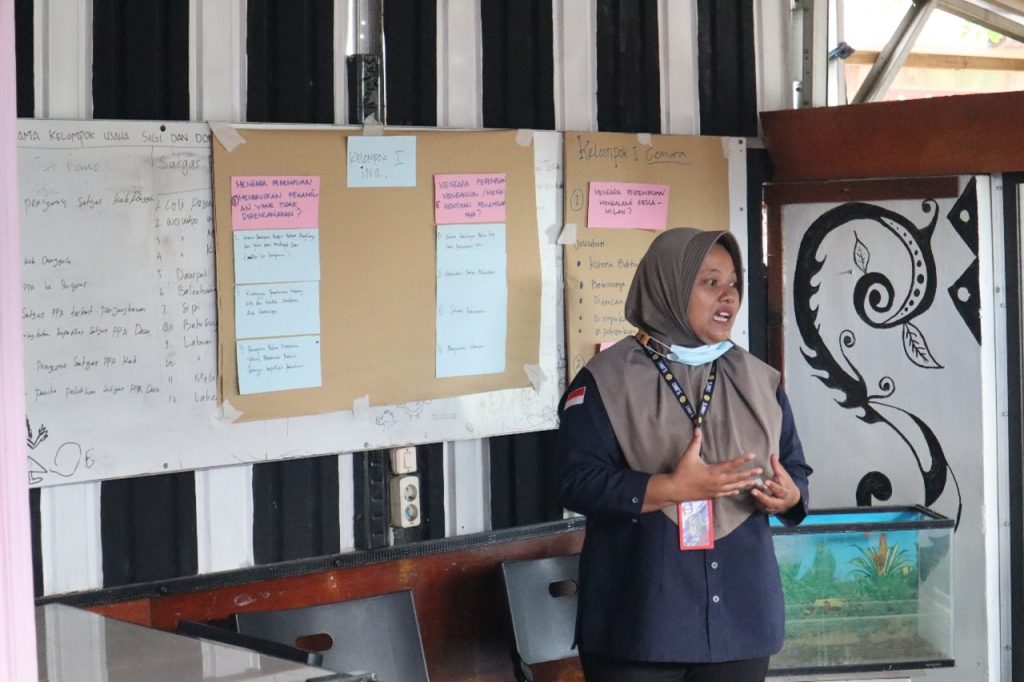
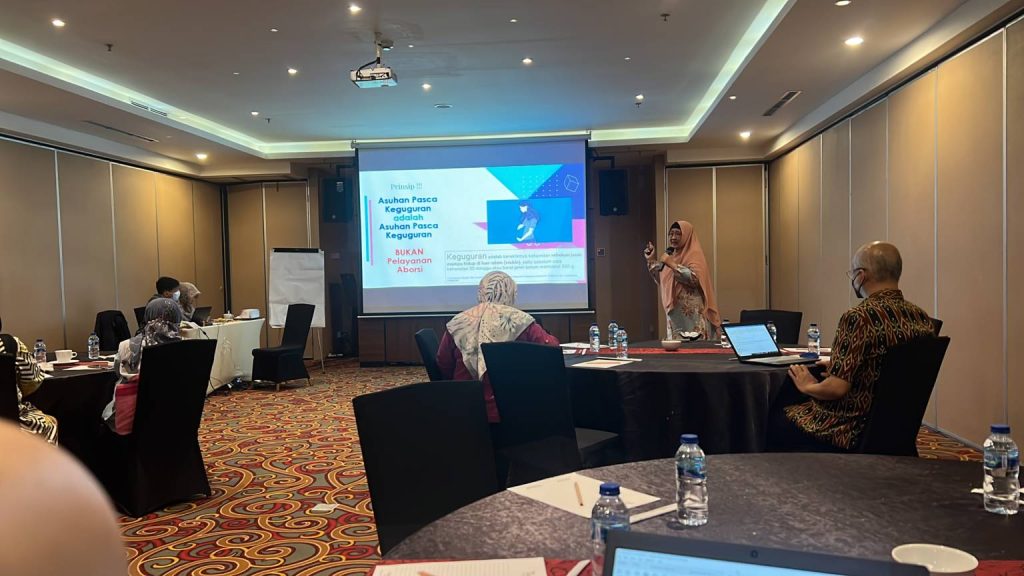
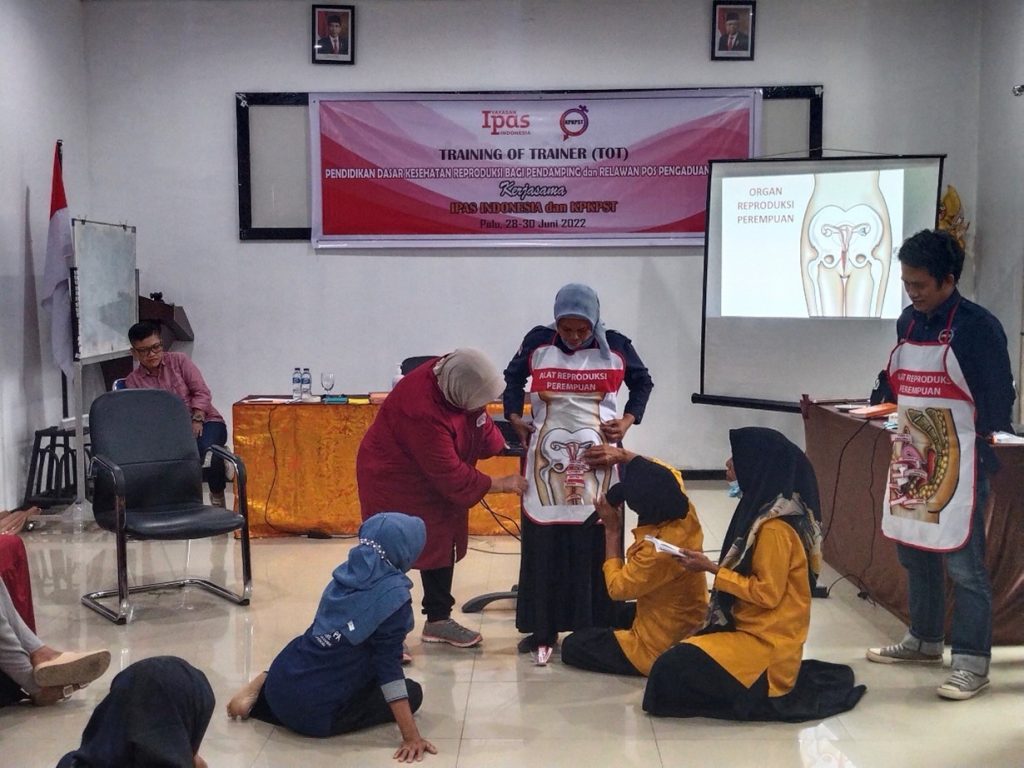
IPAS Indonesia Foundation held contraceptive service training for the CERAH (Climate Emergency, Reproductive Rights, and Health) project from April to August 2025 in Palu, Central Sulawesi.
The CERAH project was launched in November 2024 with the aim of strengthening the resilience of primary health care services in both normal and disaster situations. One of the services is related to contraception.
The training participants were all midwives with a total of 98 people from Sigi, Donggala and Parigi Moutong districts. Many of the midwives rarely get the opportunity to update their knowledge and learn new techniques. For example, in the past the contraceptive implant consisted of six sticks, but now it is different including the installation.
“But now, implants are just two rods and even one rod. It’s much simpler to install. Without this training, I wouldn’t have known,” said Santi, an independent midwife who also works at the Central Sulawesi Provincial Health Office.
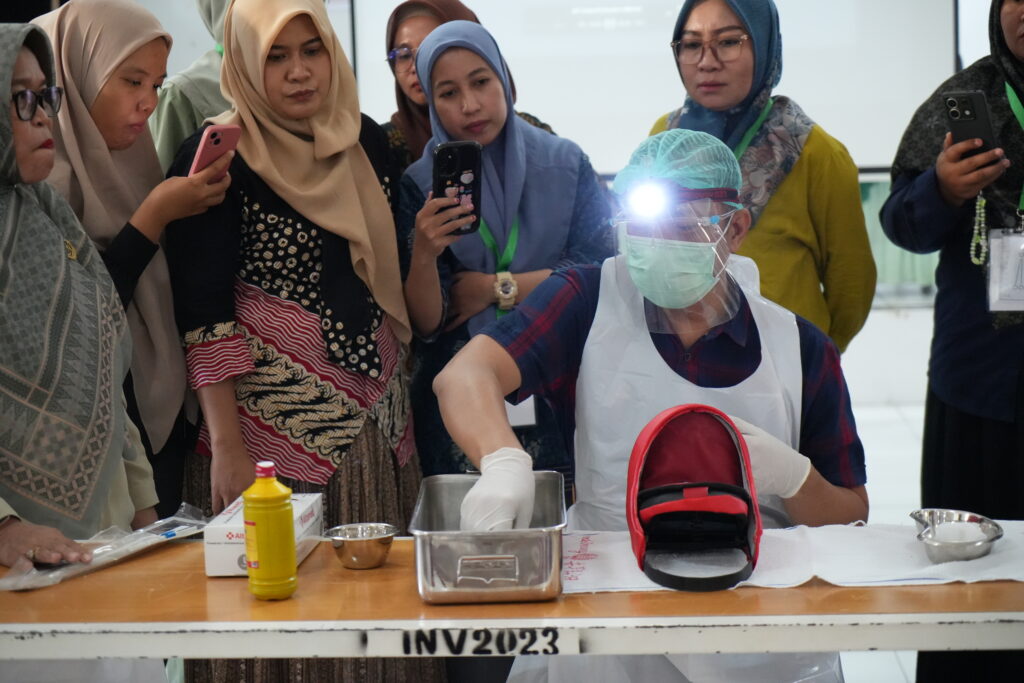
“Before attending this training, I had never installed an IUD (IntraUterine Device),” said Midwife Nila from Puskesmas Tompe, Donggala Regency. “But in this training I had the opportunity to install it, and I feel more confident. Before this I thought I was just being inserted. Through this [training], I understand more.”
Importance of Counseling for Women-Centered Counseling Services
To support the training, IPAS Indonesia Foundation also provided a pair of Birth Control Decision Making Aids (ABPK) and Contraceptive Medical Eligibility Criteria (KLOP) wheels. Both tools were introduced to facilitate the counseling process at the beginning of contraceptive services to be provided.
A good counseling session ensures that the potential acceptor can get as much information as possible and choose the most appropriate contraceptive method, as well as screen out any misinformation or concerns they may have.
“I feel the benefits of the counseling process. There were those who initially wanted an implant, but then there was an indication for a pregnancy test and it turned out to be positive. So
Reporter: Gisella Tellys