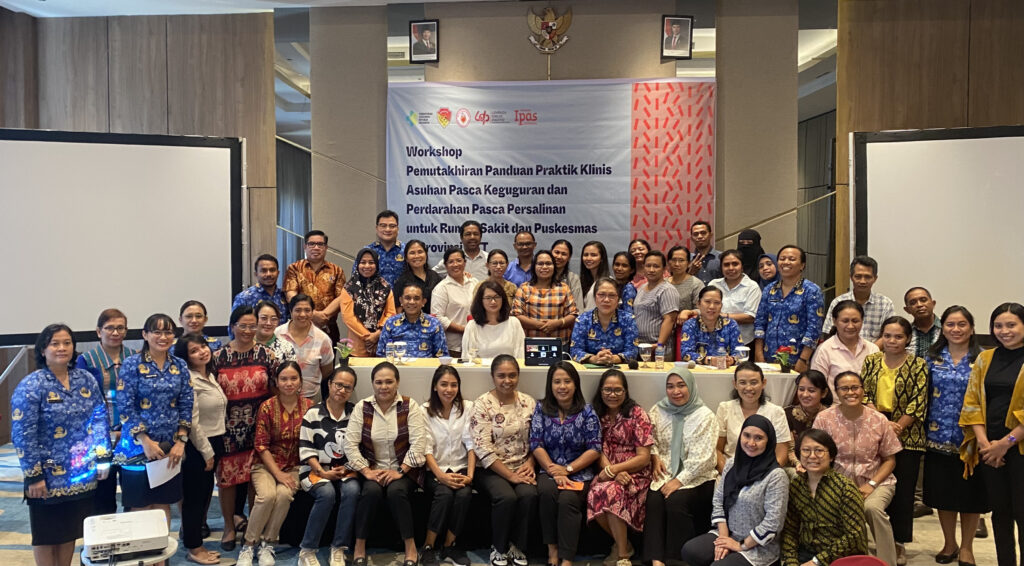
The IPAS Indonesia Foundation is organizing a workshop to update the Clinical Practice Guidelines (CPG) for post abortion care and postpartum hemorrhage for hospitals and health centers on November 29-30, 2024 in Kupang, East Nusa Tenggara.
This activity aims to increase the capacity of the management team, health department, and related health personnel team in the preparation of clinical practice guidelines (PPK) and standard operating procedures (SPO) based on scientific medical studies.
PPK was prepared as an effort to standardize medical services at the health facility level and become a reference for health workers in providing services. The existence of PPK and SPO can ensure equal and quality access to Comprehensive PAC services in Kupang City, Kupang Regency, South Central Timor Regency (TTS), and East Flores Regency.
In his opening remarks, the Head of the NTT Provincial Health Office, drg. Iin Andriani, M.Kes. said that women who experience miscarriage need to be given comprehensive and quality PAC services. In NTT itself, this service is still difficult to access by the community due to incompetent health human resources (HR), limited tools, and unavailable drugs.
“In the NTT region, health centers that have health human resource standards based on the provisions of the Indonesian Ministry of Health are only around 30%. Thanks to cooperation with partners, such as the IPAS Indonesia Foundation, the government is greatly helped to overcome these problems, especially in reproductive health services for women,” said drg. Iin.
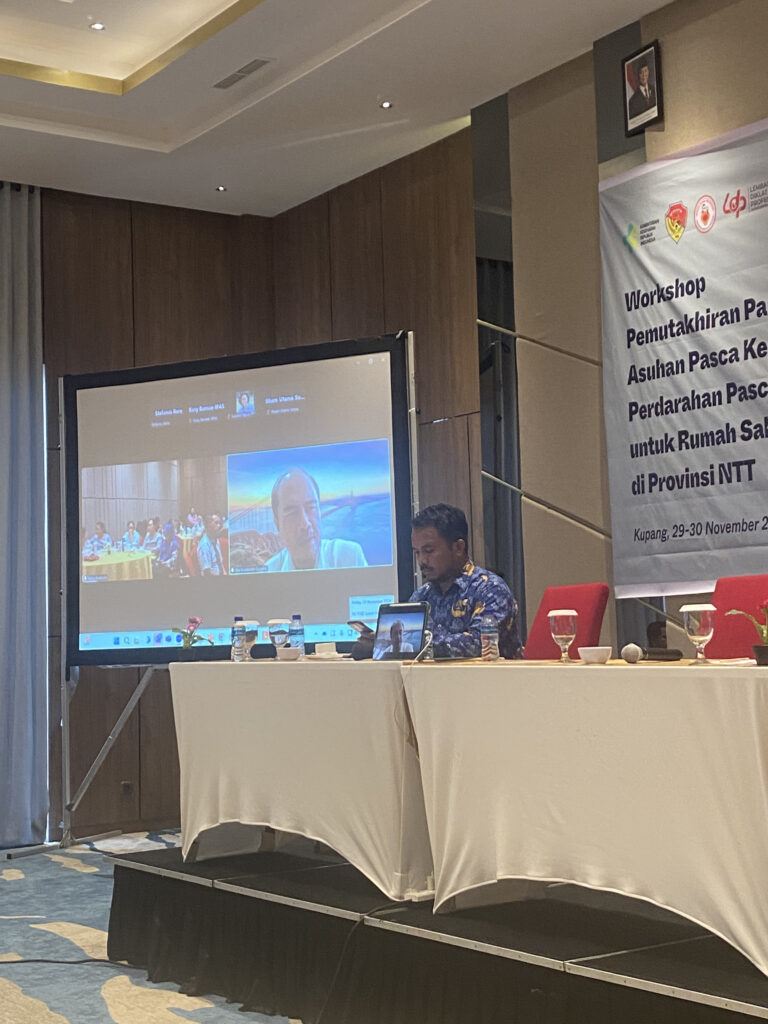
This workshop is a series of fundamental stages carried out after PAC clinical training to ensure service standardization and legal umbrella at the health facility level for health workers. This activity was designed interactively and conducted in a hybrid manner facilitated by Prof. Dr. dr. Eka Rusdianto Gunardi, SpOG, Subsp.F.E.R, MPH and dr. Ilham Utama Surya, SpOG.
“Standardization is needed to improve service quality and patient safety, reduce unnecessary or harmful medical interventions for patients, and provide the best treatment options for patients,” said Prof. Eka.
This activity agreed on several documents that have been updated according to the Comprehensive and Women-Centered PAC Guidelines, namely 1 Comprehensive APK PPK for hospitals, 1 Comprehensive PAC PPK for puskesmas, and 5 SOPs as PPK derivatives that can be used by both health facilities.
This workshop is not only a learning event, but also a starting point for greater change. Participants are expected to become agents of change in NTT Province that will serve as examples of good practices throughout Indonesia.
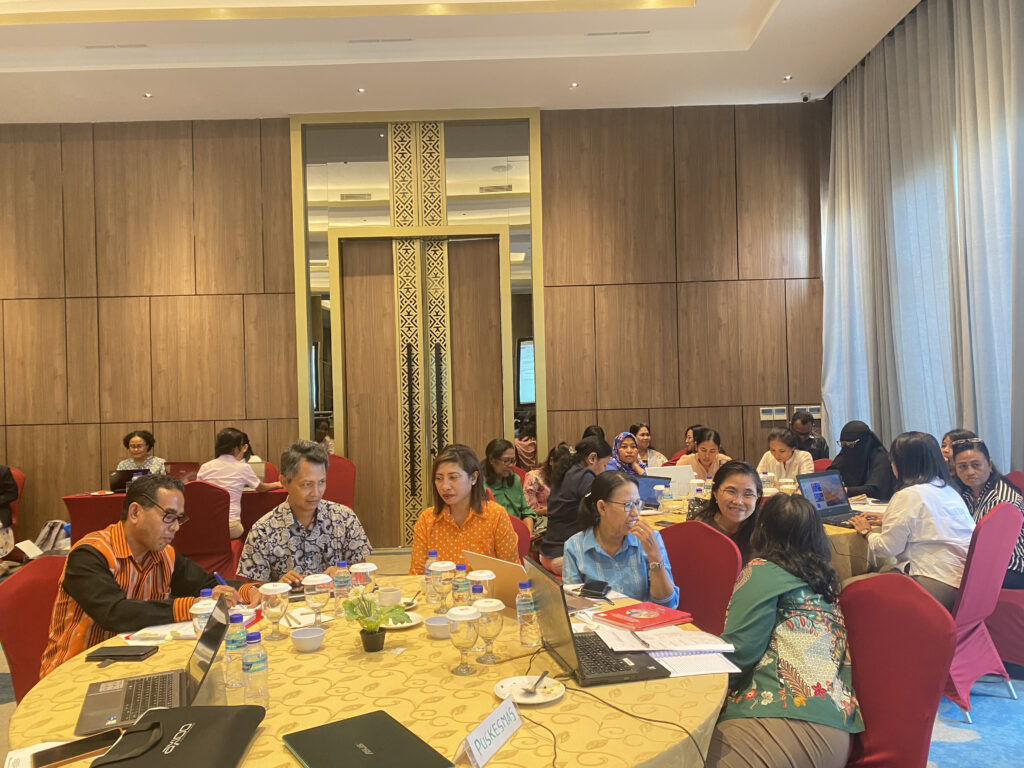
“From experience, this is the first time the PAC training was continued with the preparation of PPK and SPO involving the hospital management team and the Health Office. So that we understand the needs of the health worker team and can support so that Comprehensive APK services can run well.” said Mr. Aris, one of the management team from RSUD Prof. Dr. W.Z. Johannes Hospital.
She added, “usually only training for health workers, so we in management don’t understand their needs”.
This workshop emphasized that strengthening and involving the management team of health facilities and health offices in the preparation of PPK and its derivatives, SPO is an important stage that needs to be implemented after clinical training. This process provides an understanding for the management team to support health workers to implement services in accordance with the latest standards delivered at clinical training. Thus, quality APK services can be accessed by women.