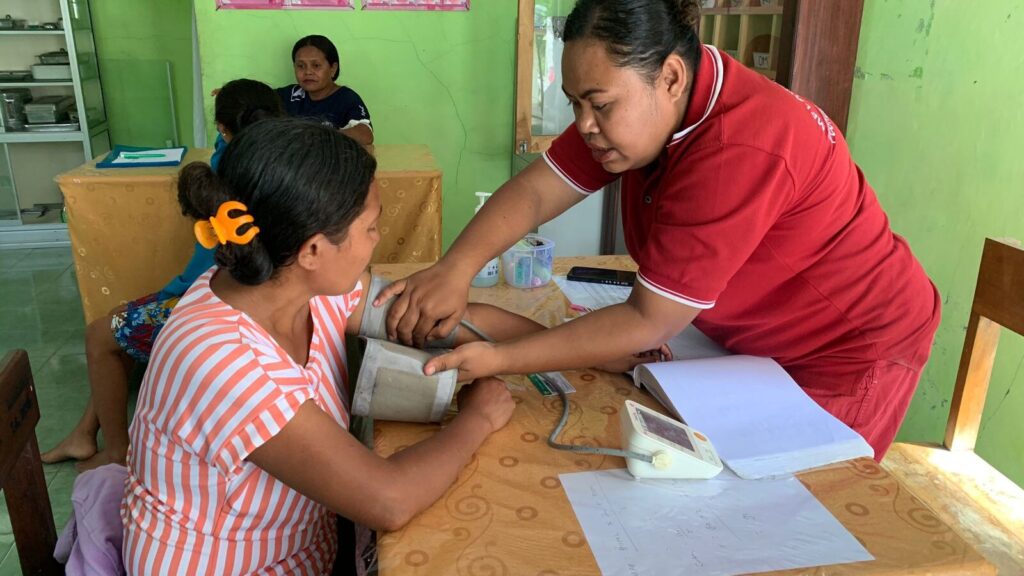
In a number of villages in Kupang Regency, East Nusa Tenggara, the influence of men’s decisions still dominates whether or not women use contraception. During her seven years as a village midwife in Ekateta, midwife Ria Baik has persistently worked to break down this patriarchal domination.
She visits homes and attends community meetings to educate about the family planning program. Like a dedicated door-to-door salesperson, she steadfastly convinced men to support their wives in joining the family planning program.
Bidan Ria revealed that myths are the biggest enemy in convincing husbands to support their wives in using contraception. Many men believe myths rather than medical facts about contraceptive methods. This is unfortunate because many wives actually want to use contraception.
“Most of them (husbands) believe that having family planning can cause diseases. Some say the milk (becomes) dry, and some (say it can cause) tumors,” said Midwife Ria.

From here, she never gets tired of conducting socialization at the Posyandu (Integrated Service Post) in her village. She also often goes to social service activities to sensitize men regarding the benefits of contraception in pregnancy and family planning. Sometimes she also visits churches to raise awareness about family planning.
In a study conducted by IPAS Indonesia, one of the biggest challenges in Kupang is reaching new acceptors due to a lack of information related to family planning. According to local government data, the modern contraceptive prevalence rate in several districts in 2022 is still relatively low, ranging from 41.90% to 49.90%. Therefore, figures like Bidan Ria are so important to continue socializing related to family planning programs.
Indeed, said Midwife Ria, the socialization carried out did not quickly change men’s perceptions. This is natural, given that these myths have long been rooted in society. Even so, some men are starting to realize that they need to support their wives’ decision to use contraception.
“Husband and wife home visit counseling, after counseling, some want (family planning), some don’t want it at all,” he said.
Increase midwives’ capacity through training
Increasing the capacity of midwives is one of the important keys to encourage the achievement of family planning programs. In addition to improving their technical skills, this training can also increase their confidence when providing services, including counseling and socialization of family planning.
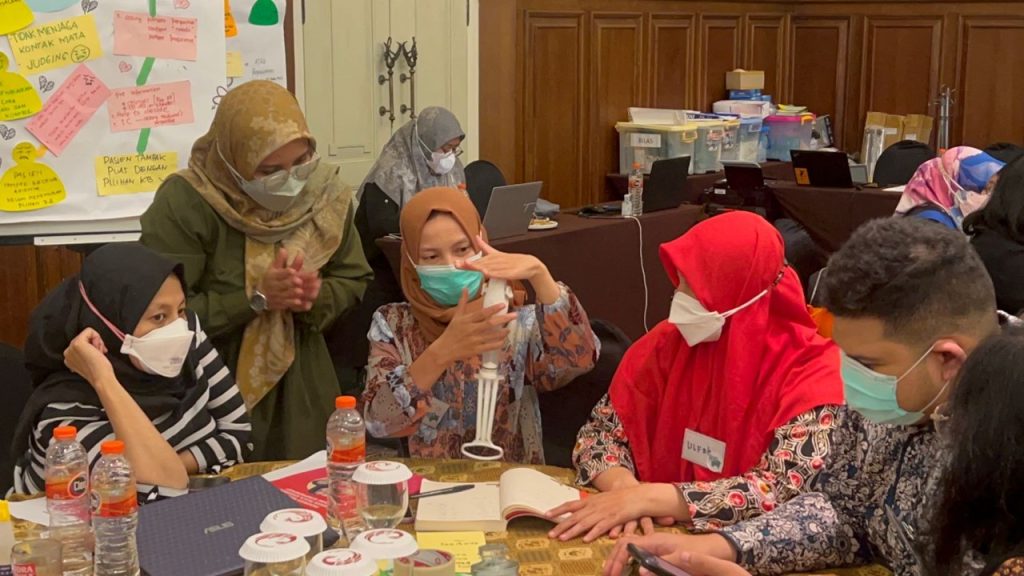
Midwife Ria was one of the midwives who participated in the family planning training organized by the IPAS Indonesia Foundation in the January-May 2024 period. She emphasized that this training could provide a refresher after graduating from midwifery studies seven years ago.
“So far, after studying and working, we have mostly installed implants in social service activities. I just found out that as a health worker, there is a procedure to prevent infection. After this training, we know the procedure better. We think this training is good,” she said.
She added that this training was able to remind her of how to install the IUD (Intrauterine Device) contraceptive method. “After working at Pustu (auxiliary health center), most services are implants. Meanwhile, there are no acceptors for IUDs, so they are not installed,” she explained.
From the material obtained at the training, she can provide the latest accurate information related to family planning methods according to the needs of women. However, this service must also be supported by the availability of facilities, such as implantable contraceptive retraction devices.
“The implant removal tool (does not yet exist), we have to deliver it to the puskesmas which is far away if there is a patient,” he concluded.