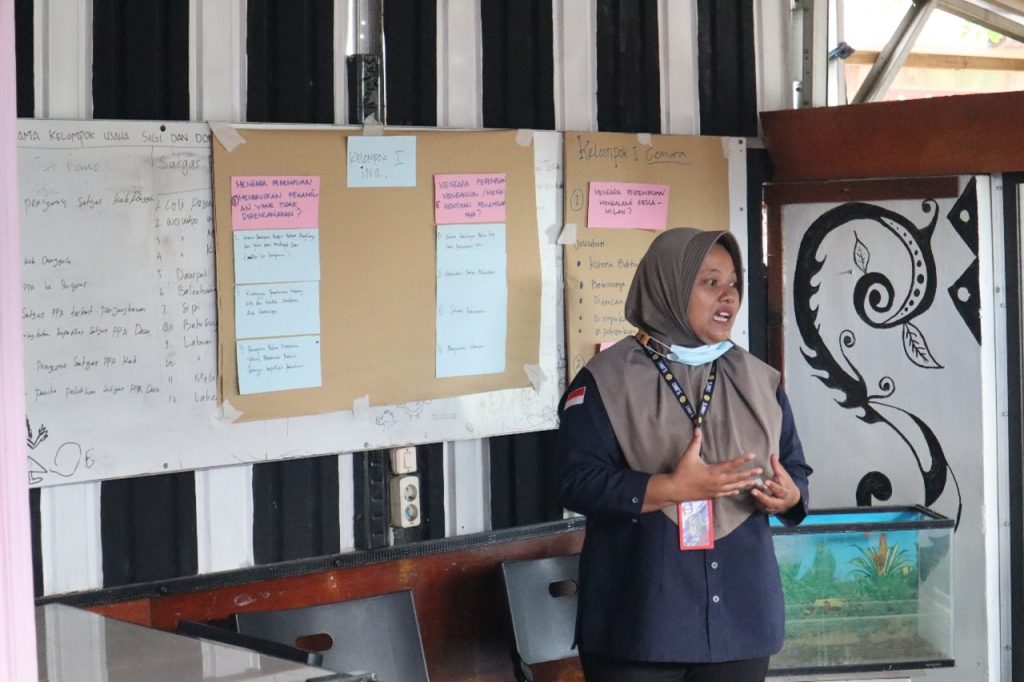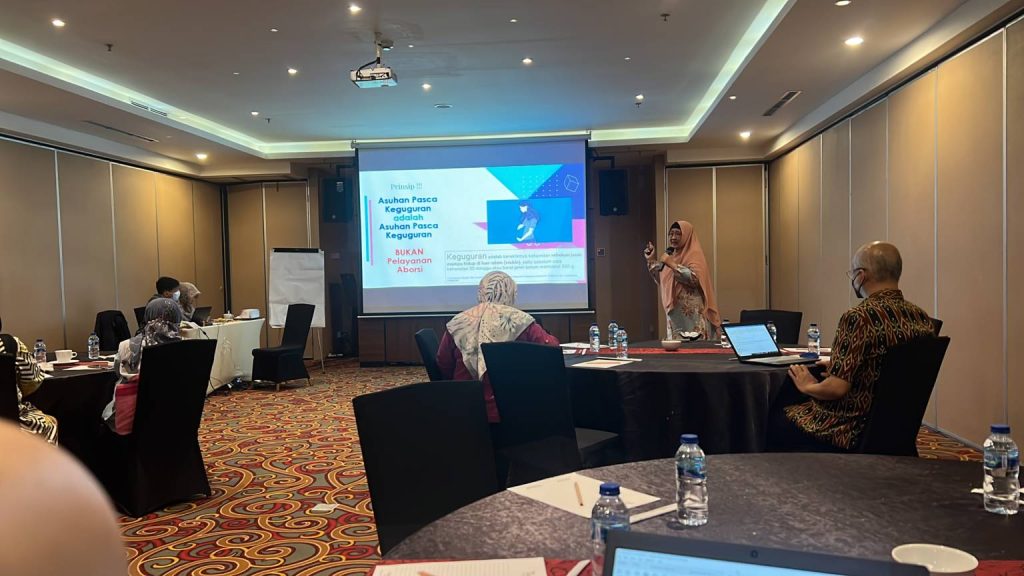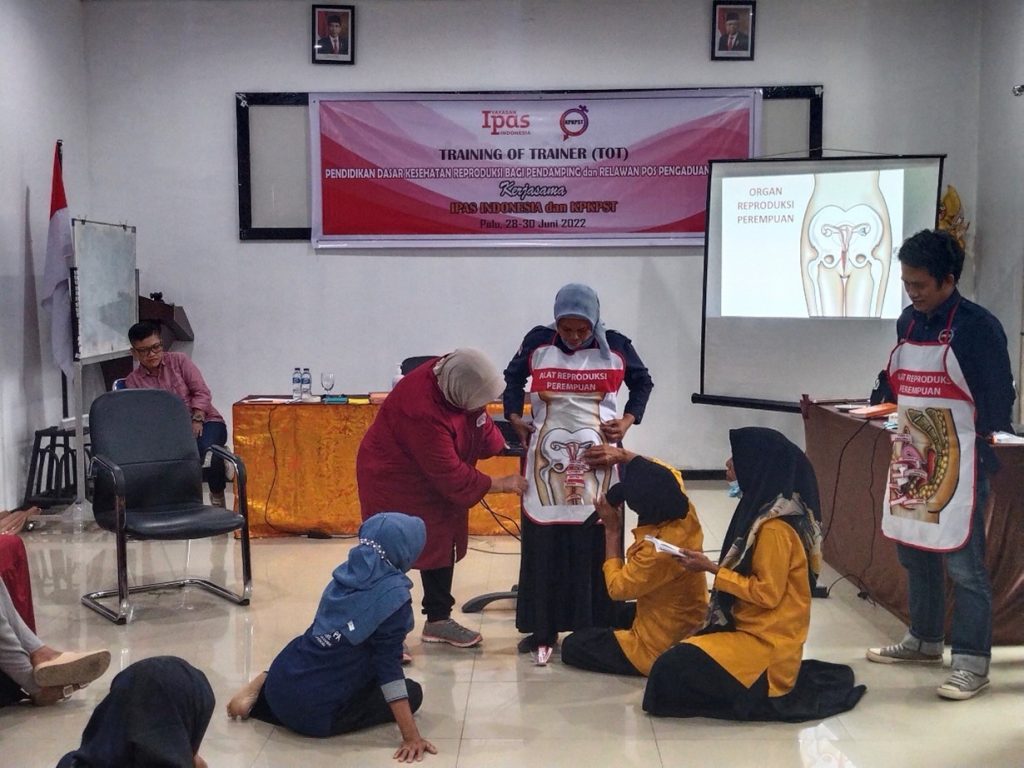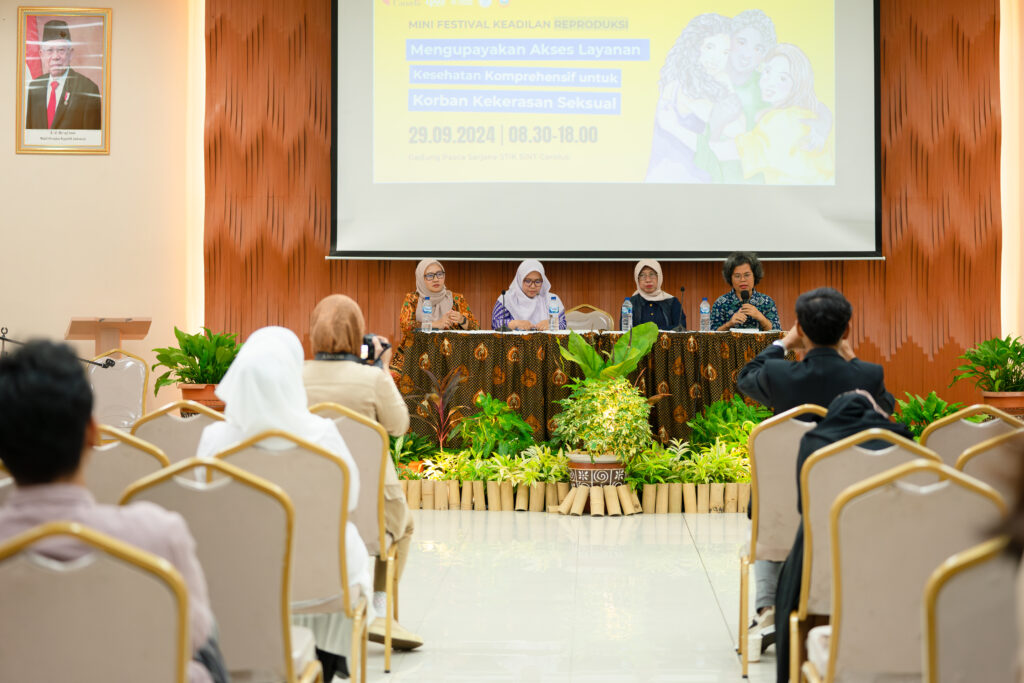
Yayasan IPAS Indonesia in collaboration with Jakarta Feminist and Dokter Tanpa Stigma held a Mini Festival of Reproductive Justice on Sunday, September 29, 2024 at STIK Sint Carolus, Central Jakarta. The event, supported by the Government of Canada, aims to increase solidarity with victims and survivors of Sexual and Gender-Based Violence (GBV).
This event is also a moment to increase public understanding related to health services for victims and survivors of GBV. Based on the law, victims of sexual violence have the right to receive treatment, protection and recovery, including health services.
Even so, many victims still have difficulty accessing adequate health services. This occurs, among others, because policies have not been fully implemented, financing schemes, stigma and uneven facilities and service quality.
To see the extent of the implementation of health services for victims and survivors of GBV, this mini festival presented a plenary discussion by inviting speakers from the Ministry of Women and Child Protection, Ministry of Health and Polda Metro Jaya. The discussion highlighted that cross-sectoral cooperation is crucial to ensure the implementation of regulations both at the national and regional levels.
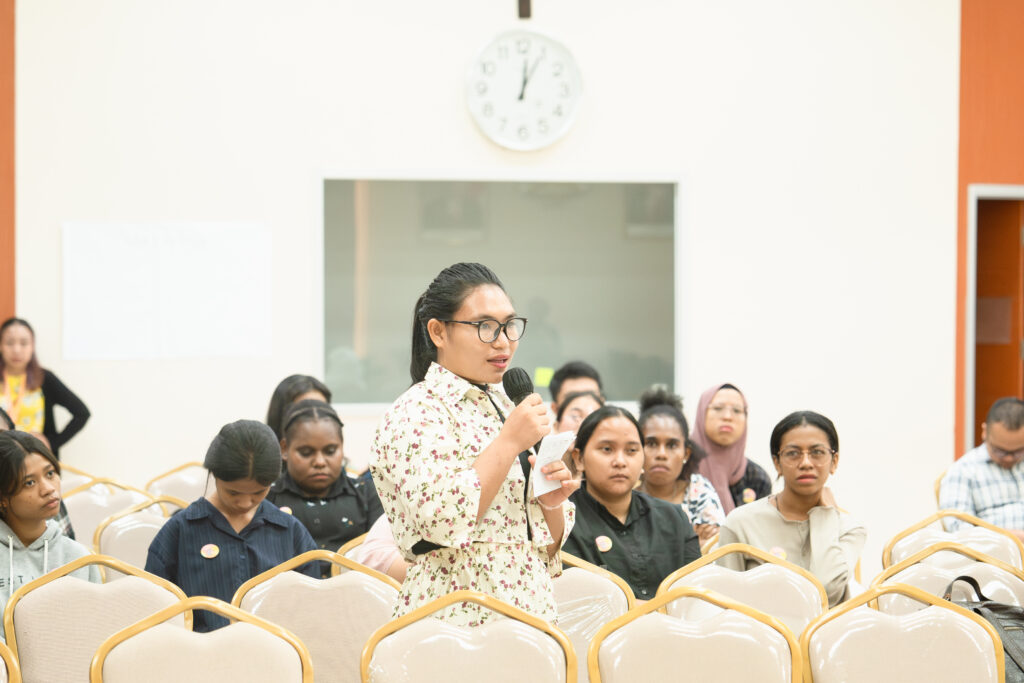
Dr. Marcia Soumokil, MPH, Executive Director of IPAS Indonesia Foundation, said that collaboration between the government and civil society is very important in ensuring comprehensive and holistic access for victims and survivors of sexual violence. This collaboration is a crucial foundation because public participation and community aspirations play an important role in overseeing policy implementation.
“From the civil society side, public involvement not only provides valuable input but also serves as a bridge between the experiences of victims and survivors and the concrete steps taken by the government. This public aspiration is expected to help improve the mechanism for handling cases of sexual violence, to make it more responsive and in accordance with the needs in the field,” she added.
She hopes that dialog and collaboration between the government and civil society will continue to strengthen legal protection, health services, psychological support, and access to justice for victims and survivors.
Anindya Restuviani, Program Director of Jakarta Feminis also added, “The issue of sexual violence and violence against women is often missed to be discussed in relation to the fulfillment of health rights, both general health, sexual and reproductive health, and also mental health.”
“I’m really happy to see many friends who want to celebrate victories, but also still express anger about how there are still many issues of sexual violence, especially for victims of sexual violence in Indonesia who have not been able to get the right to health recovery, especially related to sexual and reproductive health.” she added.
Beth Resistia, staff of the Doctors Without Stigma Advocacy Network, added that health services for victims and survivors of sexual violence are not only related to physical health, but also mental health, which is also part of human rights. “Therefore, this collaboration is expected to raise awareness, not only for the public, but also for health workers to provide comprehensive and holistic services for victims and survivors of sexual violence that are free of stigma,” she added.
More than 100 individuals from various backgrounds, ranging from the general public, students, representatives of civil society organizations, and health workers attended this event. Not only plenary sessions, visitors also participated in a number of parallel classes such as a yoga class, a writing class to voice justice for women by writer and activist Kalis Mardiasih and a zine-making class with artist Hai Rembulan.
“One of the participants made an information zine about Teman Tuli, in addition to painting, and collage she also made pop up cards which were very exciting and interactive. As the initiator, I felt lucky to be able to see their work personally in the session I helped assist one by one. Although some are unfinished, I hope this zine workshop can be a hook for them to visit the zine again when they need a place to be themselves,” said Rembulan.
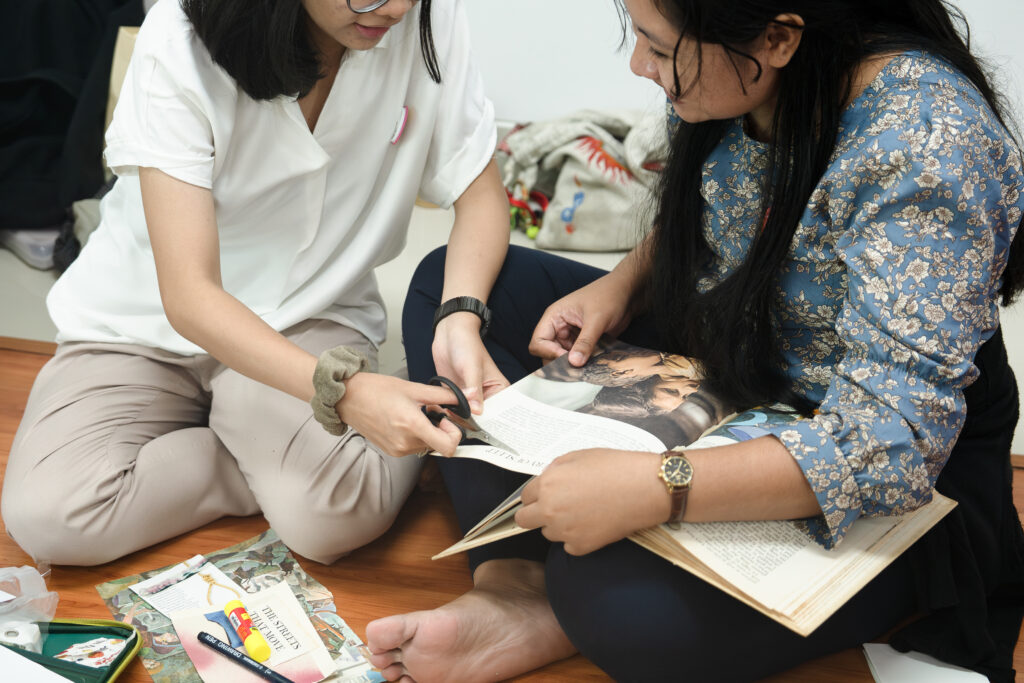
A number of visitors participated in the Emotional Tank Class from Doctors Without Stigma to recognize and manage emotions due to trauma. Equally interesting was the First Responder class from Jakarta Feminist which provided education on how to identify and respond to dangerous situations, such as violence or harassment.
The Mini Festival also featured interactive booths from Jakarta Feminist, Doctors Without Stigma and CISDI (The Center for Indonesia’s Strategic Development Initiatives) that invited participants to discuss various issues within the scope of sexual and reproductive health, sexual and gender-based violence, and mental health.
IPAS Indonesia Foundation collaborates with health workers from STIK SINT Carolus to conduct basic health checks and reproductive health counseling booths for free. This collaboration is to bring health services closer to the community.
Through this booth, 38 participants conducted basic health checks such as uric acid, blood sugar, blood pressure, and cholesterol. A total of 19 participants conducted VIA tests (cervical cancer screening) and 8 participants accessed basic reproductive health counseling services.

The mini festival was closed with a film screening and discussion with Frenia Nababan (Women’s Health Foundation), Uli Pangaribuan (LBH Apik Jakarta) and Maria Immaculata (mental health practitioner).
The first movie screened was ASA, which tells the story of the struggle of a teenager who experienced sexual violence until she got an unplanned pregnancy. The second movie was The Flower and The Bee by Monica Tedja, which shows the curiosity of a 10-year-old girl about sexuality.
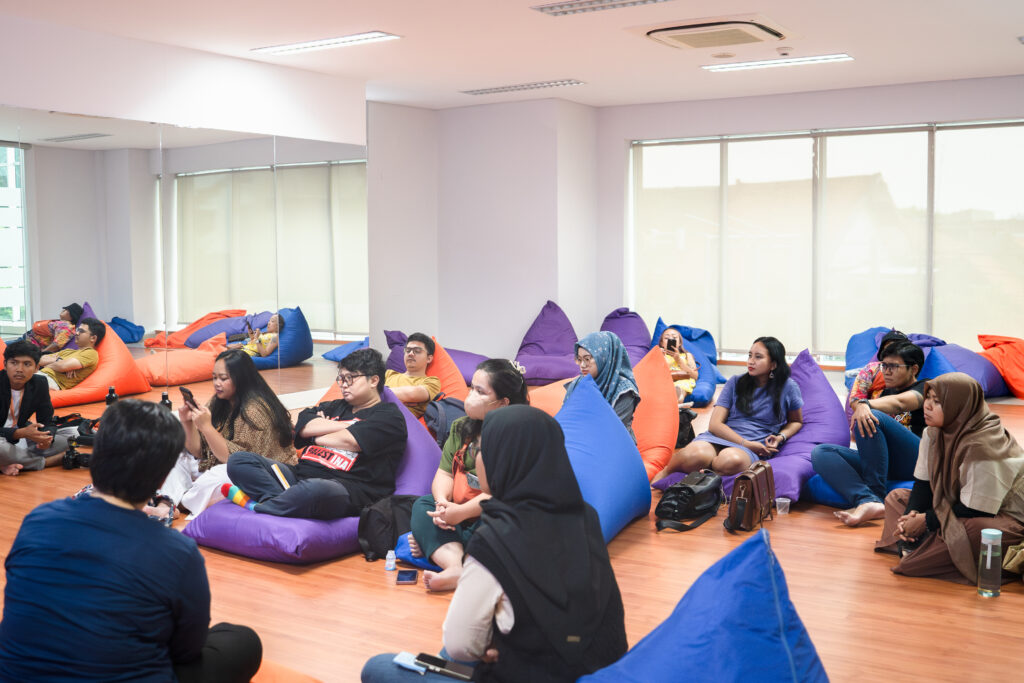
Magdalena Mahodim, one of the participants as well as a student of STIK SINT Carolus said that this event was interesting and added insight, “things related to reproductive justice discussed in this activity can be inserted in education so that students from the health sciences can be more open-minded about this matter”.