For almost 25 years, Luiza Tecla Suarez (52) has worked as a midwife at the Camplong Community Health Center in Kupang Regency, East Nusa Tenggara. In her long career, she has never participated in training, especially related to family planning.”And I only participated in the training in 2024, at the beginning it was organized by the IPAS Indonesia Foundation,” recalled Midwife Tecla.
During the training, she was introduced to the KLOP Wheel or short for Circle Diagram and Application of Medical Eligibility Criteria in Contraceptive Use. Roda KLOP is a tool to help choose the right type of contraceptive method according to health conditions. This tool is a modification of the Medical Eligibility Criteria for Contraceptive Use (MEC) issued by the World Health Organization.
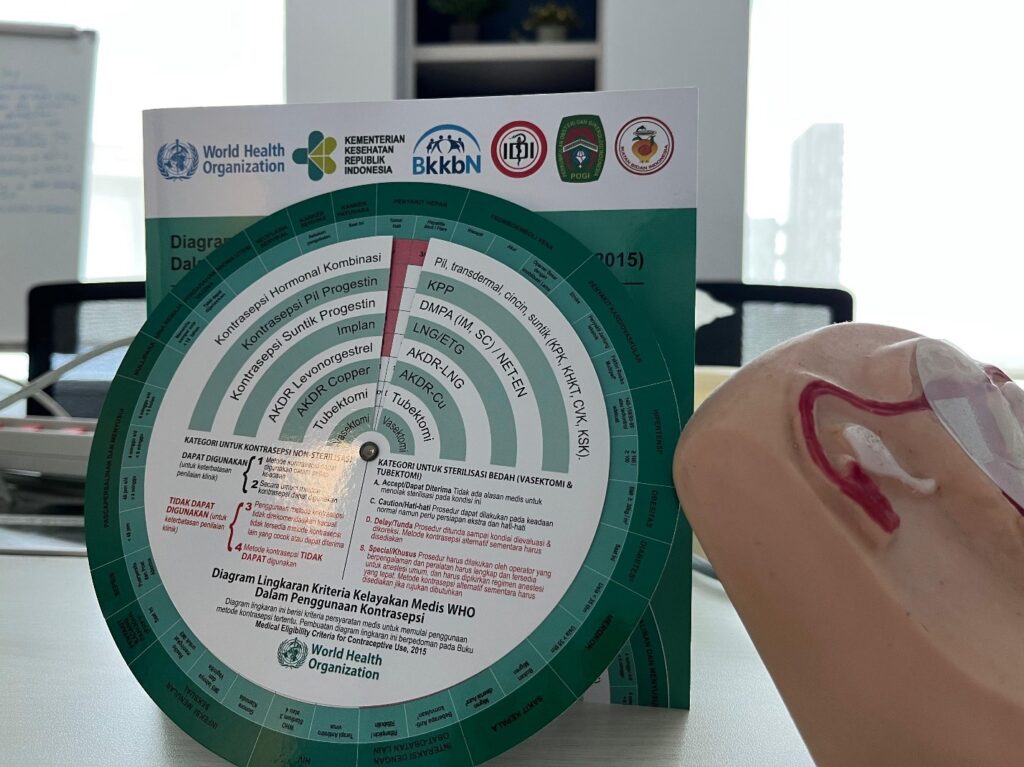
KLOP Wheel Sighting
“After we attend the training, after counseling prospective family planning acceptors, they make the decision. Then the screening for acceptors using contraceptives, we use the KLOP Wheel. The KLOP Wheel is also facilitated by IPAS Indonesia to determine the exact diagnosis of whether the mother can or cannot [choose the type of contraception,” added Midwife Tecla.
With the help of this tool, she can provide the type of contraception that suits the person’s health condition. “For example, in the past there might be pregnant women with high blood pressure, we immediately did not serve them. But after there is Roda KLOP, then we use Roda KLOP to determine whether the mother is eligible to use contraceptives or not,” she added.
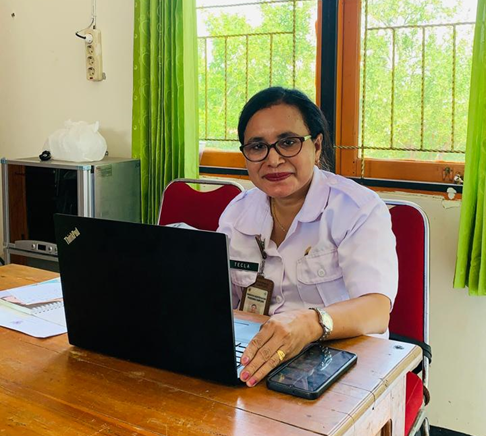
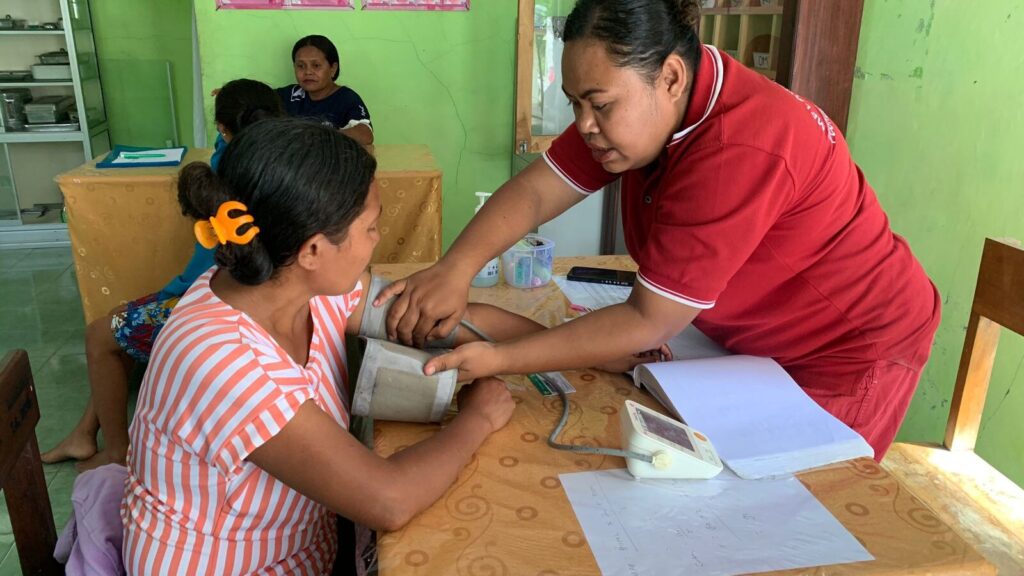
Midwife Tecla at her desk
In addition to helping make it easier to provide choices of contraceptive methods, Midwife Tecla admits that Roda KLOP can also speed up the installation. “Then in the technique, the installation technique is faster because we use the checklist in Roda KLOP. Then the technique of implant installation and implant removal is also faster because there are techniques that were taught when we attended the training,” she explained.
A similar experience was also felt by Midwife Yanti from Puskesmas Sulamu, Kupang Regency. She said that the KLOP Wheel helps in providing the right contraceptive especially with women with certain disease conditions.
“After attending the training, there we use the KLOP Wheel, so we have recommended the patient to use contraception allowed so there is a diagnosis and if there are patients with risks, we consult with the doctor who gave us the training so immediately WhatsApp,” explained Midwife Yanti.
She once consulted with a doctor and family planning training facilitator regarding a patient who had a goiter in her neck. “For example, yesterday I saw a patient who had a goiter and she said whether she could have an implant or not because it is hormonal birth control and the doctor answered using the checklist [dalam Roda KLOP],” she recalled.
Midwife Yanti added, with the counseling process and the use of Roda KLOP, many women began to understand what contraceptive methods were suitable. “So that they themselves come to [memilih] to use contraceptives,” she said.
While women are beginning to assert their right to birth control, society still faces a number of challenges. Among them are the many myths related to contraceptive methods. In addition, there are still many women who do not have family planning if they have not had a son due to family demands.
“But now there has been a change, there are mothers who come to have family planning without the knowledge of the father because they know it is their right as women,” added Midwife Yanti.
Meanwhile, Midwife Tecla underlined that the uneven ability of midwives to provide family planning services is also still a challenge. This is because there are villages in Kupang Regency that are not included in the TAKENUSA program (Tekad Bersama untuk Perempuan Nusa Tenggara).
“So that all midwives can be exposed to knowledge so that the challenges as I said above, if we have knowledge, are well equipped, then we can face these challenges well,” she concluded.